
In diesel vehicles, the fuel filter is one of the most critical components of the fuel system. It cleans fuel by removing dirt, water, and particulates before it reaches the engine. If not changed regularly, the filter clogs, fuel flow is restricted, and the engine can face serious problems. So, what happens if fuel filter is not changed, and what issues arise?
What Happens If Fuel Filter Is Not Changed? 5 Critical Problems and Solutions
SEO Title: What Happens If Fuel Filter Is Not Changed? 5 Critical Problems
Meta Description: What happens if fuel filter is not changed? Engine performance drops, fuel consumption increases, injector and pump damage risk rises. Learn the signs and solutions.
URL Slug: what-happens-if-fuel-filter-is-not-changed
Focus Keyword: what happens if fuel filter is not changed
In diesel vehicles, the fuel filter is one of the most critical components of the fuel system. It cleans fuel by removing dirt, water, and particulates before it reaches the engine. If not changed regularly, the filter clogs, fuel flow is restricted, and the engine can face serious problems. So, what happens if fuel filter is not changed, and what issues arise?
What does a fuel filter do?
The fuel filter ensures that diesel fuel is cleaned before reaching the engine. As fuel flows from the tank through the filter element, solid particles, water, and contaminants are trapped. This protects sensitive components like injectors and the fuel pump.
In modern diesel engines, injectors operate with micron-level tolerances. Even a small particle in the fuel can cause wear on injector tips, disrupt spray patterns, and lead to inefficient combustion. The fuel filter is the first line of defense against these risks.
5 critical problems if fuel filter is not changed
1. Engine performance drop and loss of power
A clogged fuel filter prevents adequate fuel from reaching the engine. While the vehicle may run normally on flat roads, a “choking” sensation occurs during climbs or sudden acceleration. Throttle response delays, the vehicle feels sluggish, and pulling power noticeably decreases.
This is especially pronounced under load (climbing, towing, full throttle). The driver notices the vehicle no longer responds as it used to.
2. Increased fuel consumption
A dirty or clogged filter restricts fuel flow, causing the engine to run inefficiently. Proper fuel spray cannot reach the combustion chamber. To maintain performance, the Engine Control Unit (ECU) attempts to inject more fuel. Result: higher-than-normal fuel consumption.
Over time, this increases operating costs. Every kilometer driven with a filtration problem means unnecessary fuel waste.
3. Injector contamination and damage risk (what happens if fuel filter is not changed?)
When the fuel filter fails to do its job, particles and water in the fuel reach the injectors. Diesel injectors operate at high pressure (in some systems over 2,000 bar). Even micron-level dirt can cause wear on the injector needle, clog spray holes, and lead to uneven fuel distribution.
Damaged injectors:
- Cause rough idle
- Create engine misfires
- Increase black smoke from exhaust
- Trigger the check engine light
Injector cleaning or replacement costs far more than filter maintenance.
4. Fuel pump strain and premature failure
A clogged filter makes it harder for fuel to pass through. The fuel pump must work harder to maintain the same flow rate. This causes the pump to overheat, wear internally, and shorten its lifespan.
Fuel pump failure can leave the vehicle unable to start or stranded on the road. Pump replacement is one of the most expensive consequences of neglected filter maintenance.
5. Check engine light and stalling issues
In modern diesel vehicles, fuel pressure sensors monitor fuel flow through the filter. When the filter clogs, pressure drops and the ECU detects this. The check engine light (yellow engine symbol) illuminates on the dashboard.
In advanced clogging:
- Vehicle idles roughly
- Stalls in stop-and-go traffic
- Cranks for a long time before starting
- In some cases, the engine won’t start at all
These symptoms are clear signs the filter needs immediate replacement.
Other signs of fuel filter clogging
If you experience one or more of the following signs, the fuel filter should be checked. The answer to what happens if fuel filter is not changed becomes clearer:
- Loss of power: Especially noticeable when climbing or under load
- Engine misfires: Vibration at low RPM or constant speed
- Rough idle: Tachometer fluctuates, engine shakes
- Hard starting: Extended cranking, vehicle starts with difficulty
- Black exhaust smoke: Dark smoke during acceleration
- Increased fuel consumption: Tank empties faster than usual
- Sudden stalling: Engine shuts off at idle or during deceleration
These signs indicate fuel is not reaching the engine adequately or cleanly.
When should the fuel filter be changed?
Fuel filter replacement intervals vary by manufacturer recommendations, driving conditions, and fuel quality. Generally, diesel vehicles should have the filter replaced every 20,000–40,000 km. However, some manufacturers specify longer or shorter intervals.
Factors affecting replacement timing:
- Heavy city driving: Frequent stop-and-go shortens filter life
- Low-quality fuel: Fuel with high dirt and water content clogs filters faster
- Dusty environments: Vehicles operating in construction, mining, or agriculture
- Extended idling: Fleet vehicles, generators
- Age and mileage: Filter replacement becomes more critical in older vehicles
For the most accurate information, consult the maintenance schedule in your vehicle’s owner manual. Remember, the answer to what happens if fuel filter is not changed is hidden in that table.
Why should fuel filter replacement be done professionally?
Although fuel filter replacement may seem simple, it requires attention. Incorrect installation, air leaks, wrong filter model, or damaged gaskets can cause serious problems.
In professional replacement:
- Correct filter model is selected
- Air is removed from the system (with primer pump or diagnostic tool)
- Gaskets and connections are inspected
- Leak test is performed
- If needed, fault codes are cleared and adaptation is done
Improper replacement can cause the engine not to start or air to enter the fuel system.
Kaya Grup fuel filter replacement
Kaya Grup offers original and high-quality fuel filters for diesel vehicles. With proper filter selection for your vehicle model, professional replacement service, and post-maintenance inspections, we help ensure your engine operates reliably for the long term.
Get Product Information: To learn about the appropriate fuel filter model for your vehicle and check stock availability, contact Kaya Grup.
Frequently Asked Questions
How often should a diesel fuel filter be changed?
Generally, it is recommended to replace it every 20,000–40,000 km. However, the vehicle manufacturer’s recommendation, driving conditions, and fuel quality can affect this interval. Heavy city driving or low-quality fuel may shorten the replacement period.
What happens if fuel filter is not changed?
If the fuel filter is not changed, engine performance drops, fuel consumption increases, and there is a risk of injector and fuel pump damage. In severe clogging, the vehicle may be difficult to start or may not start at all.
Does changing the fuel filter improve fuel economy?
Yes. A clean filter allows proper fuel flow and contributes to efficient combustion. A clogged filter causes the engine to consume more fuel. Fuel economy improvement can be observed after filter replacement.
What are the signs of a bad fuel filter?
Loss of power, delayed throttle response, hard starting, rough idle, sudden stalling, black exhaust smoke, and increased fuel consumption are the most common signs. If one or more of these symptoms occur, the filter should be checked.
Will a car start with a clogged fuel filter?
With mild clogging, the car will start but performance will be reduced. With severe clogging, the vehicle may be difficult to start, stall at idle, or may not start at all. In extreme cases, fuel flow is cut off and the engine stops.
How long does fuel filter replacement take?
In a professional service, it typically takes 30–60 minutes. However, this can vary depending on the vehicle model, filter location, and time required to remove air from the system. Some vehicles may require adaptation with a diagnostic tool.
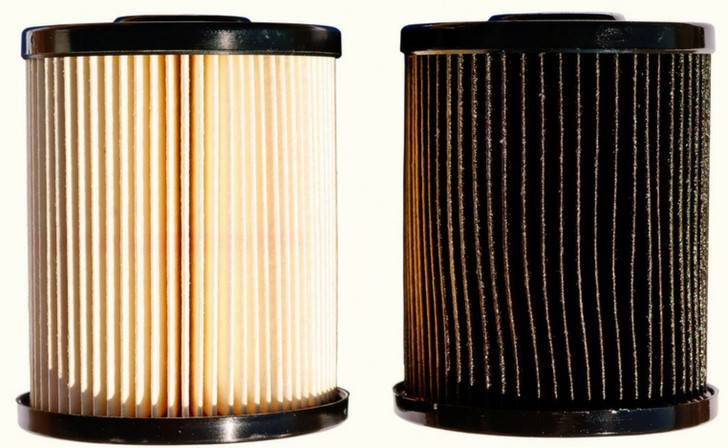
How can I tell if the fuel filter is swollen?
Deformation of the filter housing, fuel leaks, hard starting, or failure to start may indicate swelling. In severe clogging, fuel flow is cut off and the engine stops. The filter should be replaced immediately.